Introduction
In commercial real estate development, few metrics are as widely used as traffic counts. While modern analytics tools and demographic models have expanded how developers analyze sites, vehicle traffic remains one of the most powerful indicators of potential retail success.
For shopping center developers, high traffic corridors can significantly influence tenant demand, visibility, and long-term property value.
Understanding Traffic Counts in Retail Development
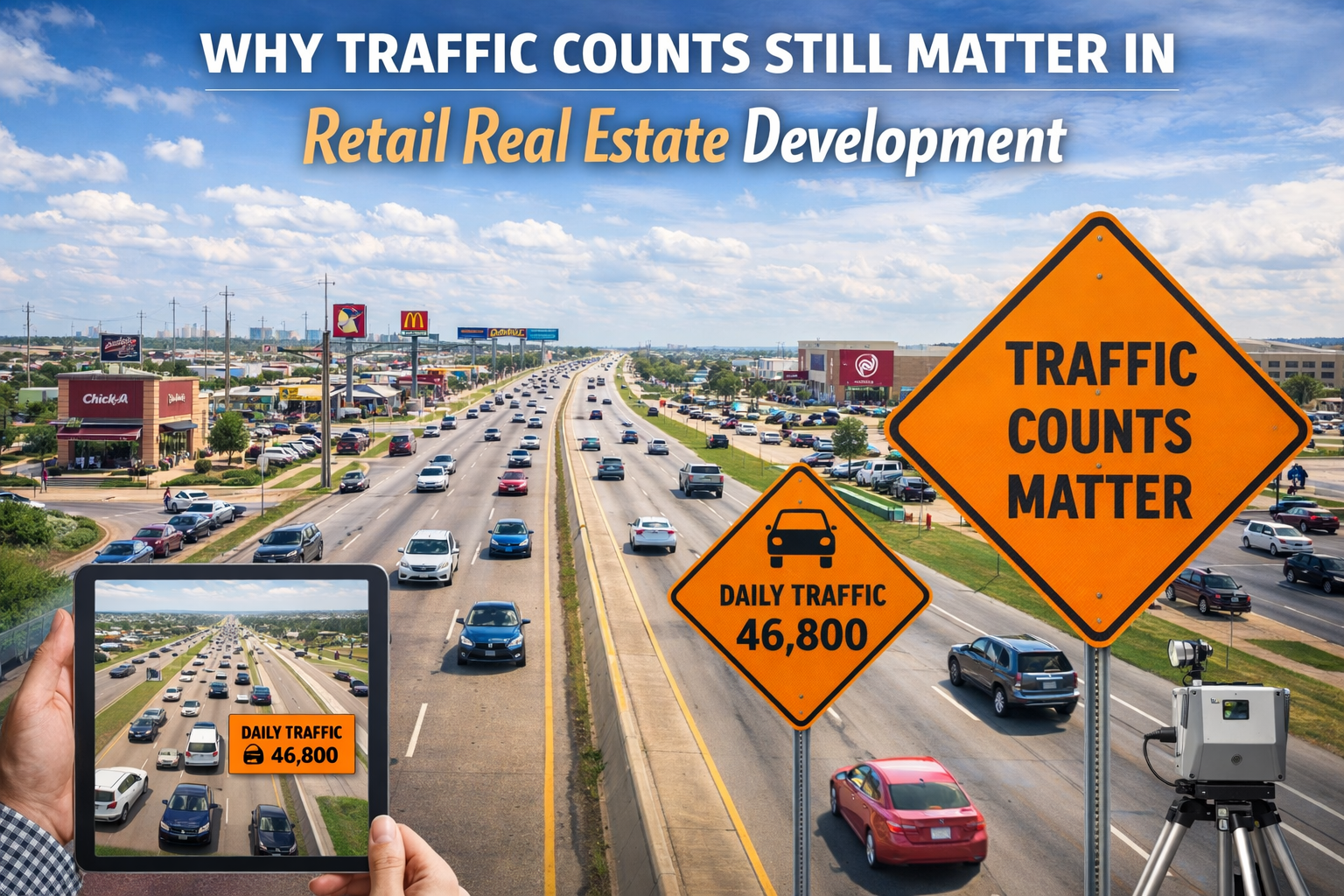
Traffic counts measure the number of vehicles passing a location each day, often referred to as Average Daily Traffic (ADT).
Transportation agencies such as the Texas Department of Transportation (TxDOT) track these numbers across major highways and arterial roads.
Retailers rely heavily on traffic data when selecting locations because it provides insight into:
- customer exposure
- accessibility
- potential impulse visits
- overall visibility
Locations with higher traffic volumes typically generate stronger tenant interest.
Visibility Drives Retail Sales
Retail businesses depend on consistent customer traffic. Locations along major commuter routes or high-visibility intersections provide daily exposure to thousands of potential customers.
For example, many successful shopping centers are positioned along:
- regional highways
- major suburban arterials
- intersections connecting residential developments
Retail tenants often prioritize these locations because visibility acts as free advertising, drawing attention from passing drivers.
Traffic Patterns Reflect Population Growth
Traffic counts often increase in areas experiencing strong residential growth.
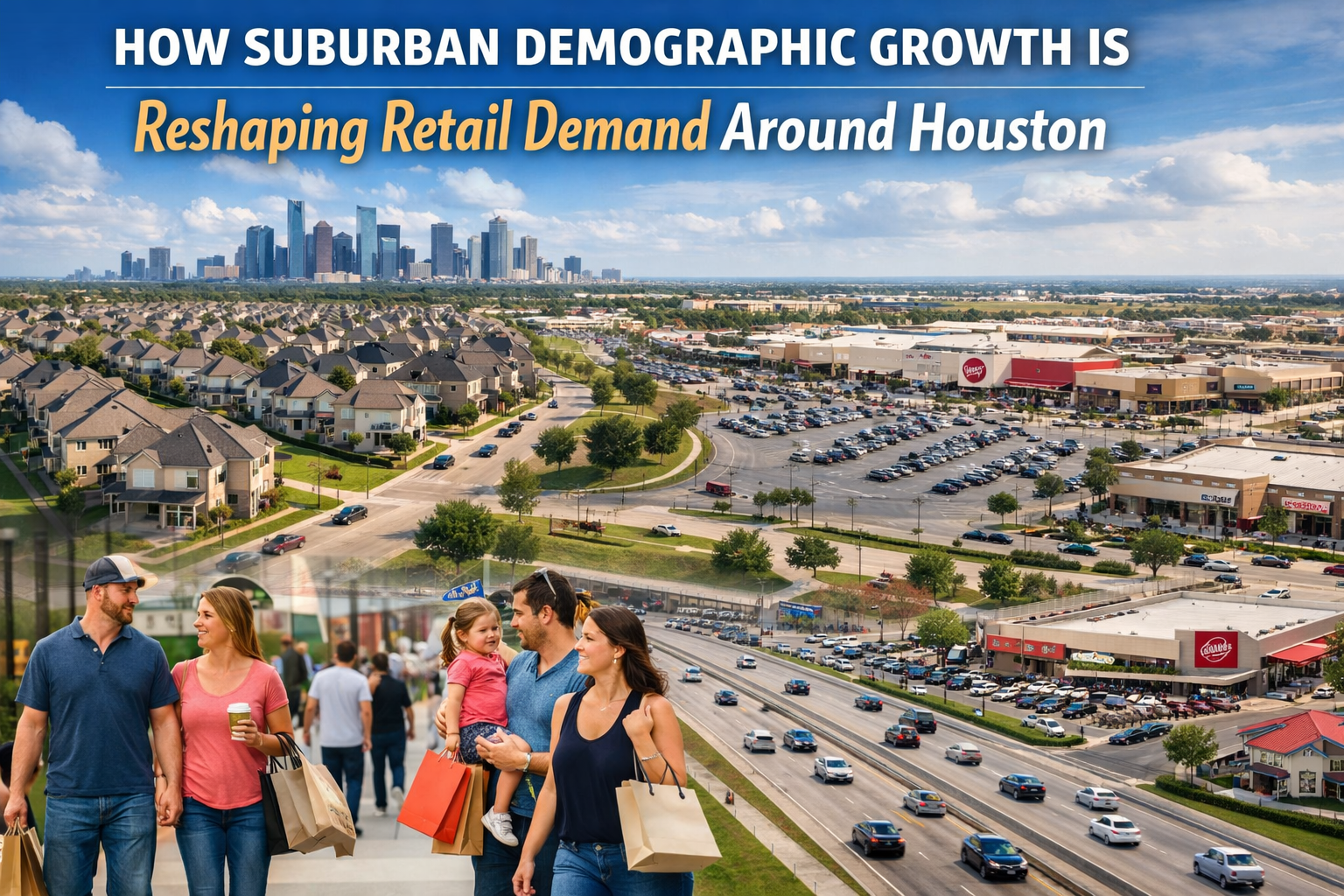
When new housing developments expand into suburban corridors, nearby roadways begin carrying more daily commuters. Over time, these traffic patterns signal opportunities for retail development.
Developers frequently monitor:
- population growth within a 3-mile radius
- residential construction activity
- roadway expansion plans
- projected traffic increases
Together, these indicators help determine where future retail demand is likely to emerge.
Why High-Traffic Intersections Attract Tenants
Retailers often prefer sites located at signalized intersections with strong traffic flow because these locations offer multiple advantages:
- easy vehicle access
- high visibility from multiple directions
- convenient entry points for customers
This is why many successful shopping centers are built at major intersections rather than mid-block sites.
According to industry research from the Urban Land Institute, accessibility and visibility remain among the most important factors influencing retail site selection.
The Long-Term Impact on Property Value
For investors, properties positioned along high-traffic corridors often benefit from:
- stronger leasing demand
- higher occupancy stability
- stronger tenant sales performance
- improved resale value
Because traffic patterns tend to increase as cities grow, well-located retail sites can become even more valuable over time.
Conclusion
Despite advances in data analytics and consumer insights, traffic counts remain one of the most important metrics in retail real estate development.
For developers and investors evaluating shopping center opportunities, high-visibility locations with strong vehicle traffic continue to offer significant advantages. As suburban areas expand across Texas, retail centers positioned along major corridors are likely to remain key commercial hubs for growing communities.
Sources
Texas Department of Transportation Traffic Data
Urban Land Institute Retail Development Research
U.S. Census Bureau Population Growth Statistics