Introduction
As parts of commercial real estate remain volatile, the Houston retail market continues to shine as a stable and high-demand investment opportunity. Recent data from 2024 and 2025 reveal impressive absorption rates, consistently low vacancy, and a tight supply of new retail space. For commercial real estate investors seeking reliable returns, shopping centers and retail properties in Houston have emerged as some of the most attractive assets in today’s CRE landscape.
1. Strong Absorption, Low Vacancy Keep Market Healthy
- According to the Q3 2025 report from Colliers, the Houston retail market recorded a net absorption of 838,910 square feet — a sharp jump of 63.7% quarter-over-quarter, and 51.8% year-over-year. Colliers+1
- Overall vacancy held at 5.8% despite increased demand. That level remains relatively low by historical standards. Colliers+1
- Even in earlier quarters of 2025, vacancy hovered around 5.5%, while asking rents remained stable or edged upward. Colliers+2colliershouston.s3.us-east-2.amazonaws.com+2
Why this matters: The Houston retail market continues to signal that demand for retail space outpaces supply — a condition that tends to favor rental rate growth, stable occupancy, and strong investor returns.
2. Tight Pipeline & Limited Supply Reduce Oversaturation Risk
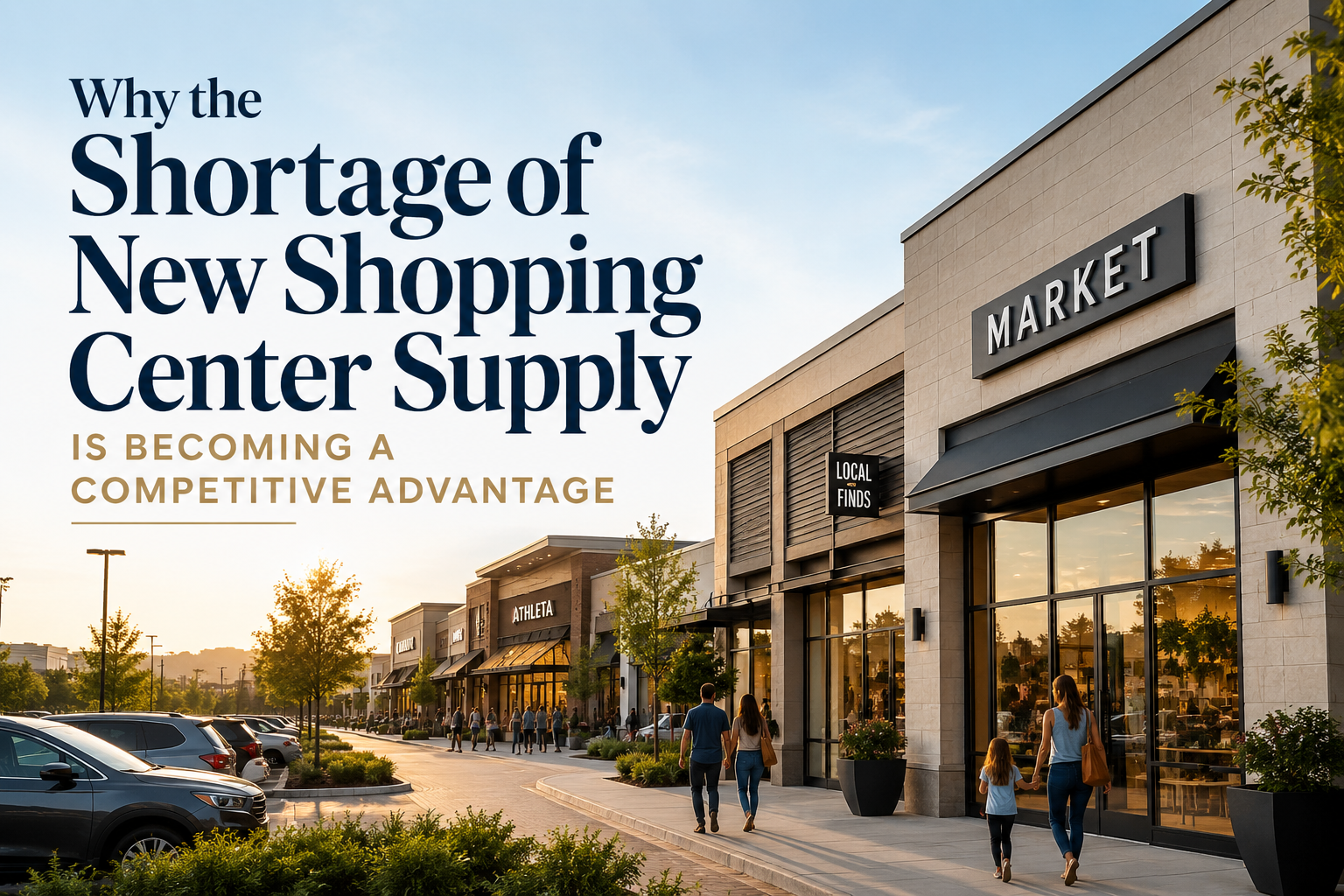
- As of Q3 2025, Houston still had about 2.4 million SF of retail space under construction, but deliveries fell 20.3% quarter-over-quarter and 38.5% year-over-year. Colliers+1
- In recent years, multiple reports have shown a slowdown in large-scale retail construction in Houston. This trend benefits existing shopping centers and retail properties by limiting new supply, helping maintain higher occupancy rates and stronger rental growth. Colliers+1
Implication: With construction activity restrained and demand rising (or stable), well-located existing retail assets—especially grocery-anchored and service-driven centers—become even more valuable. Investors who already own or plan to acquire shopping centers may benefit from improved bargaining power for both rents and sales.
3. Strong Demand for Grocery, Services & Value Retail
- Major retailers and national chains (grocery, big-box essentials, discount stores, service-oriented tenants) continue to expand, even in 2025, indicating resilient demand. Colliers+2colliershouston.s3.us-east-2.amazonaws.com+2
- Across Houston’s growing suburban markets, strong population growth is driving steady demand for everyday-use retail (groceries, pharmacy, quick-service restaurants, medical/health, discount stores) appears especially stable. Texas Real Estate Research Center+2wpb.houston.org+2
Takeaway: Shopping centers that focus on essential — not luxury — retail and services are showing better performance than high-end or discretionary retail. For long-term investors, this lowers risk and improves predictability.
4. Investor Sentiment Shows Stability Amid Uncertainty
- Even with broader economic uncertainty (interest rates, inflation, shifting consumer habits), retail in Houston has maintained a stable vacancy rate and recorded net absorption. Partners Real Estate+2Colliers+2
- For investors prioritizing yield, stability, and resilience (as opposed to speculative upside), retail shopping centers in Houston appear as a compelling asset class today — especially in light of undervaluation in other CRE sectors (office, some types of industrial, etc.).
Conclusion
Given persistently strong absorption, stable vacancy, tight supply pipelines, and a tenant mix centered on essential goods and services — shopping centers in Houston stand out as among the most attractive CRE investments in Texas today. For investors seeking cash flow, lower asset volatility, and long-term value, well-positioned retail assets likely offer a resilient, “anchor”-type investment.