Introduction
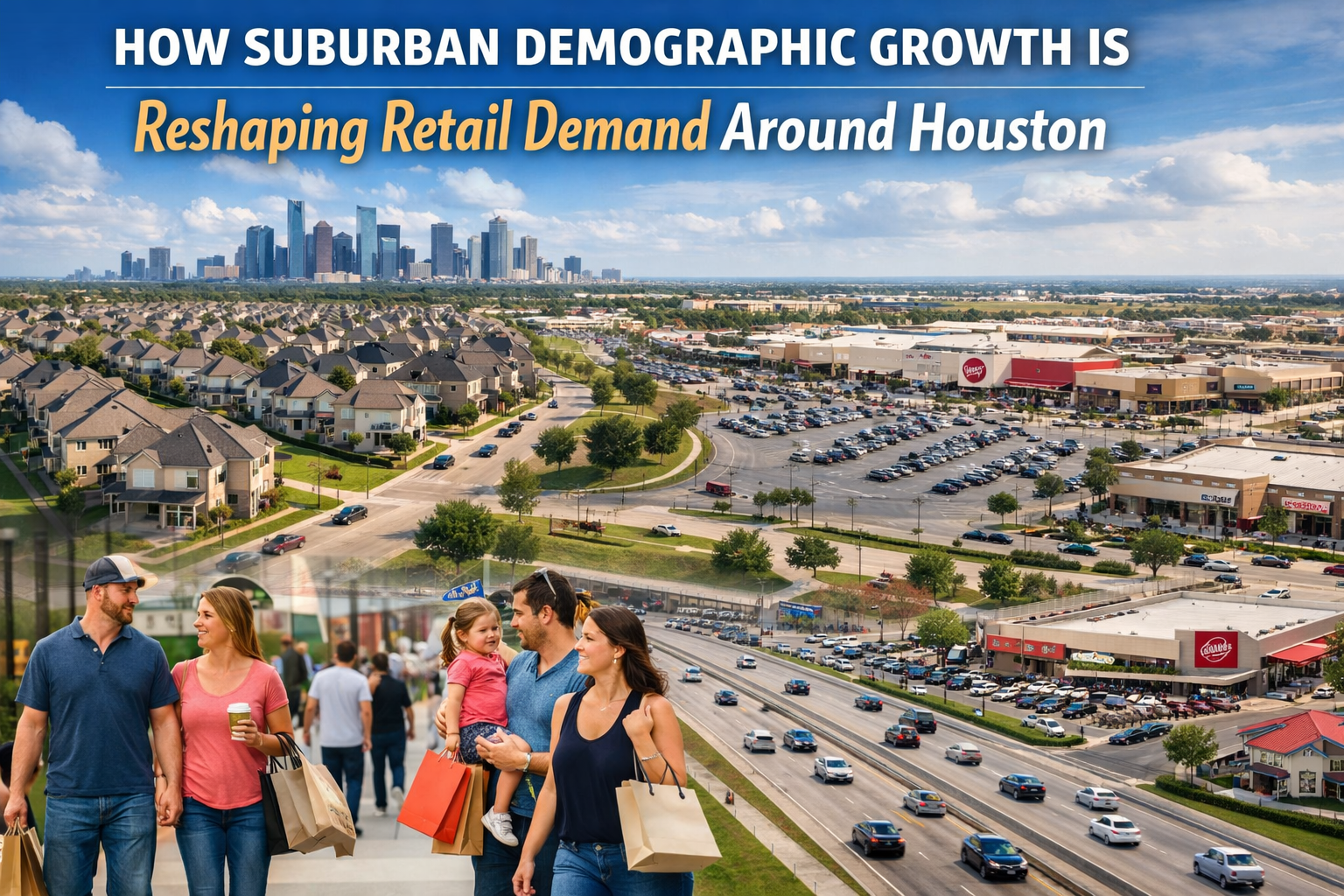
Across the United States, population growth patterns are shifting away from dense urban cores toward surrounding suburban communities. Nowhere is this trend more visible than in Texas, where cities like Houston continue expanding through strong growth in suburban corridors.
For retail real estate investors, these demographic shifts are creating new opportunities. As households relocate to suburban neighborhoods, demand for everyday retail services — grocery stores, pharmacies, dining, and essential retail — grows alongside them.
Understanding these migration trends is essential for evaluating the long-term performance of shopping center investments.
Population Growth Is Concentrated in Suburban Markets
Texas has been one of the fastest-growing states in the country for several years. According to the U.S. Census Bureau, Texas added more than 470,000 residents between 2022 and 2023, the largest population increase of any U.S. state.
Much of this growth has occurred outside major city centers, with suburban communities absorbing a large share of new residents.
In the Houston region specifically, suburbs such as Conroe, Katy, Fulshear, and Cypress have experienced rapid population expansion as families and professionals seek:
- More housing affordability
- Larger homes and communities
- Access to new schools and infrastructure
- Proximity to employment hubs while avoiding urban density
This shift toward suburban living has important implications for commercial real estate demand.
Household Formation Drives Neighborhood Retail Demand
When new residential communities develop, retail demand typically follows. New households generate demand for a wide range of daily services, including:
- Grocery stores
- Restaurants and quick-service dining
- Medical and dental offices
- Fitness centers
- Childcare and personal services
- Convenience retail
Because these businesses rely heavily on local customer traffic, they tend to cluster around suburban residential growth areas.
According to the International Council of Shopping Centers (ICSC), neighborhood and community shopping centers anchored by essential retail remain among the most resilient formats because they serve everyday consumer needs close to home.
For investors, this translates into stable tenant demand in suburban retail locations.
Migration Patterns Are Changing Consumer Behavior
Suburban population growth is also influencing how consumers shop and spend.
Compared to dense urban neighborhoods, suburban communities tend to produce higher demand for convenience-based retail — locations where residents can quickly access services without traveling long distances.
This has supported leasing activity for retail categories such as:
- Grocery stores and specialty food markets
- Quick-service restaurants
- Medical and wellness providers
- Discount retailers
- Household service providers
Many of these tenants actively seek locations in high-growth suburban corridors, where new housing developments create a reliable customer base.
Texas Economic Growth Supports Long-Term Demand
Beyond population migration alone, Texas benefits from strong economic drivers that support retail demand.
The state continues to attract businesses across industries, including energy, logistics, healthcare, and technology. According to the Texas Economic Development Corporation, job growth and corporate relocations have been key factors supporting population expansion across major metros.
Houston, in particular, remains one of the largest and most economically diverse cities in the United States. Its combination of employment opportunities and relatively affordable housing has helped fuel suburban expansion in surrounding counties.
As employment centers expand, retail demand often follows residential growth patterns.
What This Means for Shopping Center Investors
For retail real estate investors, demographic migration trends offer valuable insights when evaluating potential markets.
Suburban areas experiencing strong population growth often provide several advantages:
- Expanding consumer base
- Strong demand for essential retail services
- Stable tenant categories focused on daily needs
- Long-term growth supported by housing development
Shopping centers located near growing residential communities can benefit from consistent customer traffic and strong leasing demand from service-oriented tenants.
As suburban development continues around Houston and other Texas metros, retail assets positioned near these expanding communities may see sustained demand over time.
Conclusion
Demographic trends are one of the most powerful forces shaping real estate markets. In Texas, population growth continues to shift toward suburban communities where new households are creating demand for essential retail services.
For investors focused on shopping center assets, understanding these migration patterns can help identify locations where long-term consumer demand is likely to remain strong.
As Houston’s suburban corridors continue expanding, neighborhood retail centers that serve these communities are positioned to remain an important part of the region’s commercial real estate landscape.
Sources
U.S. Census Bureau – Population Growth Data
Texas Economic Development Corporation – State Growth & Economic Data
International Council of Shopping Centers (ICSC) Retail Research
Texas Demographic Center Population Trends