Introduction
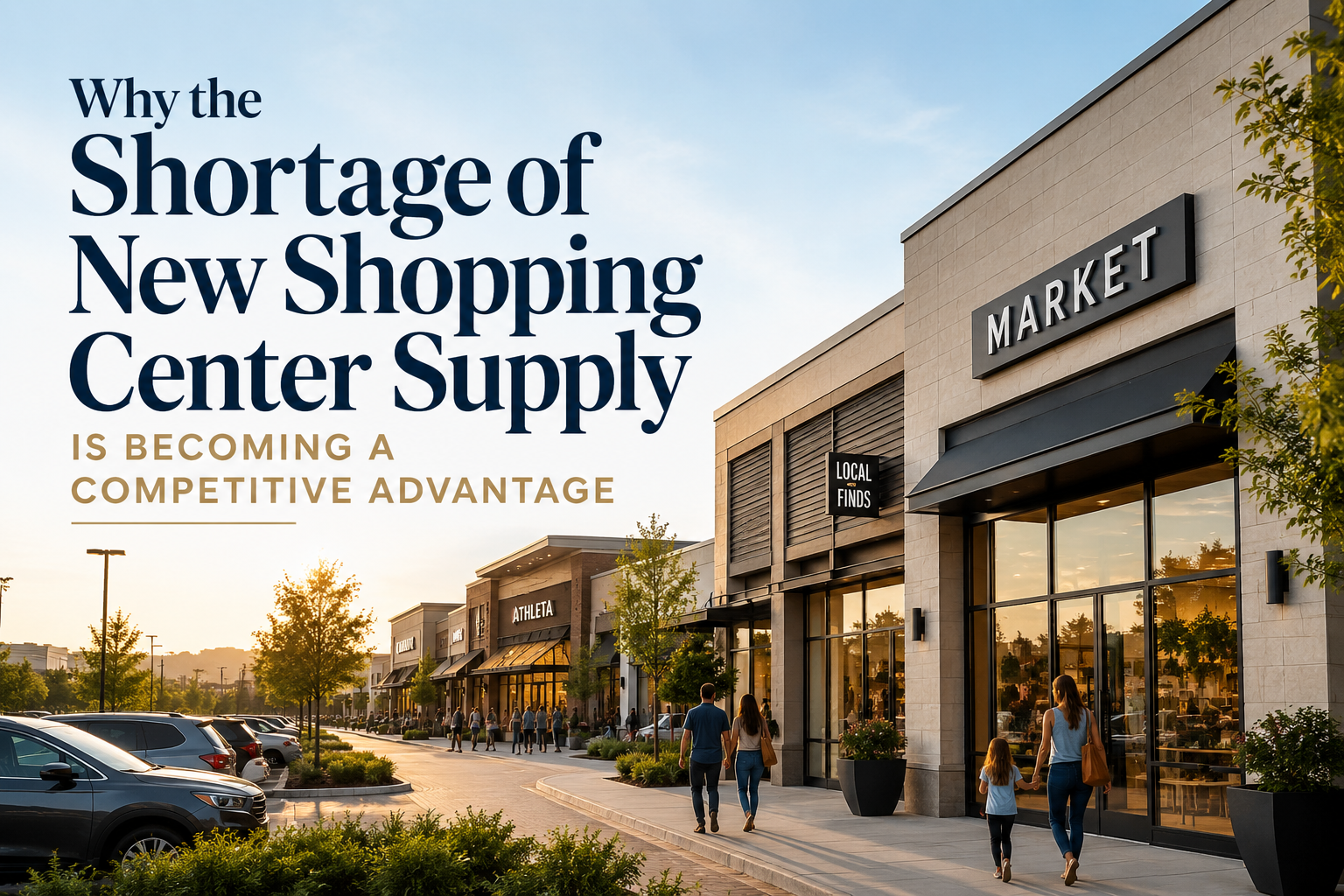
For years, commercial real estate headlines focused on changing consumer behavior, e-commerce growth, and economic uncertainty. Yet one of the most important developments shaping shopping center performance today is much simpler: there are not enough new shopping centers being built.
Across the country, new retail construction remains well below historical averages. While demand for well-located neighborhood and community shopping centers continues, the pipeline of new supply has remained relatively constrained.
For shopping center owners, developers, and investors, this supply imbalance is becoming an increasingly important factor influencing long-term performance.
The Retail Construction Pipeline Looks Different Today
Before the Great Financial Crisis, developers delivered significant amounts of retail space annually across major U.S. markets.
The environment today is different.
Higher construction costs, more disciplined lending practices, increased entitlement complexity, and rising development standards have all contributed to a more selective development landscape.
As a result, developers are pursuing fewer projects, and many markets are seeing significantly less new retail inventory delivered than in previous decades.
This isn’t necessarily a negative trend. In fact, limited new supply often supports stronger fundamentals for existing and newly developed shopping centers.
Why Retailers Are Competing for Space
Many retailers continue expanding, particularly in categories such as:
- Grocery
- Health and wellness
- Medical services
- Restaurants
- Discount retail
- Personal services
At the same time, available shopping center space in desirable locations remains limited.
This dynamic has created an environment where tenants are increasingly competing for high-quality locations rather than landlords competing for tenants.
For developers, this often translates into stronger leasing momentum and greater tenant interest in well-positioned projects.
Quality Locations Matter More Than Ever
When supply is limited, site selection becomes even more important.
Retailers are prioritizing locations that offer:
- Strong visibility
- Convenient access
- Growing residential populations
- Established traffic patterns
- Long-term community growth
Shopping centers that meet these criteria often attract tenant demand earlier in the development process.
This trend reinforces the importance of disciplined site selection and market analysis before development begins.
What Investors Should Watch
Limited supply does not automatically guarantee success.
Investors should continue evaluating:
- Tenant quality
- Trade area demographics
- Development timing
- Market competition
- Long-term growth drivers
However, markets with constrained supply and sustained tenant demand often provide favorable conditions for long-term shopping center ownership.
Why Disciplined Developers May Benefit Most
Limited supply alone does not guarantee successful projects. In fact, as development opportunities become more selective, execution becomes increasingly important.
Developers must evaluate far more than population growth or traffic counts. Site visibility, access, tenant demand, municipal approvals, infrastructure planning, and long-term community growth all play a role in determining whether a shopping center can perform successfully over time.
At Malabar Hill Capital, we believe successful shopping center development starts with a disciplined approach to site selection and underwriting. In an environment where fewer projects are being built, identifying the right opportunity becomes even more important than simply pursuing development activity.
As the industry continues to operate with constrained new supply, developers who focus on long-term fundamentals may be better positioned to create lasting value for both tenants and investors.
Conclusion
One of the most important stories shaping commercial real estate today is not what is being built—it’s what isn’t.
The limited pipeline of new shopping center development is creating a unique environment where well-positioned projects can benefit from strong tenant demand and limited competition. While market conditions will continue to evolve, the combination of disciplined development, strategic site selection, and favorable supply dynamics may create compelling opportunities in the years ahead.
The Malabar Hill Capital Perspective
At Malabar Hill Capital, we focus on developing neighborhood and community shopping centers in growing markets where long-term fundamentals support sustainable demand. While industry trends provide valuable insight, we believe successful development ultimately comes down to disciplined execution, thoughtful site selection, and a long-term investment approach.
Sources
- CBRE U.S. Real Estate Market Outlook 2026
- ICSC Industry Forecasts 2026
- CRE Daily Retail Market Coverage (2026)
- PwC / ULI Emerging Trends in Real Estate 2026